Songwriting for Confidence, Self-Expression, and Connection - The Churchill Fellowship

Songwriting for Confidence, Self-Expression, and Connection

Songwriting is a very personal thing and often a solitary endeavour, especially when we’re first getting into it. We picture the classic ‘bedroom songwriter’ with a guitar and a notebook, working away on a new idea. But when the experience of songwriting is shared, it can unlock something powerful.

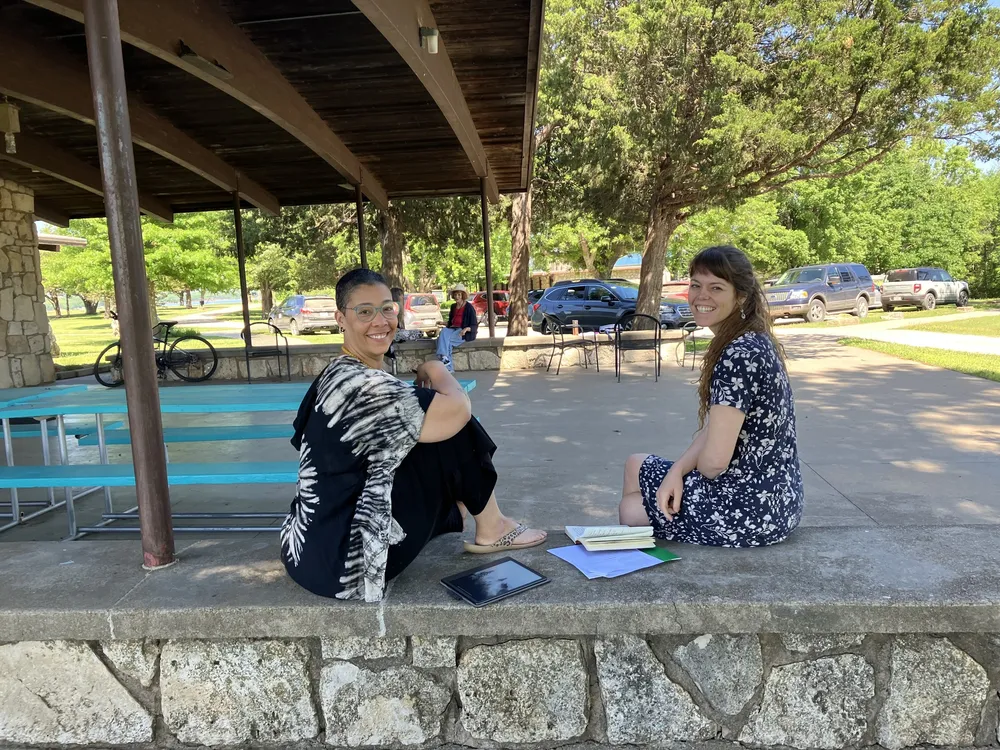
Hannah sharing new lyric ideas at the Brave Voice Retreat in Kansas. Credit: Caryn Mirriam-Goldberg. Download 'Hannah Louise Partridge IMG_3748'

Songwriting can create connection, belonging, and self-expression in ways that are not only life-affirming, but sometimes life-saving.

Through my work with CHORUS Songwriting CIC, I’ve seen how collaborative songwriting can create meaningful connections between young creatives. It helps people find their voice, build confidence, and form lasting peer networks. Yet affordable opportunities to develop these skills are limited, particularly for women and gender-diverse musicians.

That was the starting point for my Churchill Fellowship. I wanted to understand how creative retreats could be designed to make the biggest and longest-lasting impact, in particular when it comes to tackling social isolation, lack of connection, and the anxiety or lack of confidence that so often stops people from pursuing their creativity.

My Fellowship explored how collaborative songwriting retreats in the United States support emerging musicians to thrive and stay motivated to keep music as an important part of their lives. The USA is the world’s largest commercial music market, and many organisations there have developed innovative retreat models that bring songwriters together to create, learn, and build community.

During my research I visited six songwriting retreats across the country, meeting facilitators, musicians, and producers who use residential retreats to nurture creative collaboration. These programmes typically bring together between 15 and 100 musicians for several days in dedicated creative spaces, combining workshops, co-writing sessions, masterclasses, and informal sharing events.

"Ultimately, songwriting isn’t just about music. It’s about creating spaces where people feel heard, connected and empowered."

What struck me most was the attention to detail when it came to building intentional community and how differently each retreat approached this. Some used simple prompts to break the ice, like randomly assigning people to sit together at the first meal. Others took a more reflective approach, such as asking participants to leave a short note for every other person at the retreat by the end of the week.

Musically, participants were encouraged to experiment, take risks, and collaborate without the competitive pressures that often dominate the music industry. For many musicians, having access to that kind of space was transformative, not just for their relationship with music, but for their relationship with themselves.

One moment that stayed with me was the final sharing concert at one retreat. A cheerful Canadian songwriter performed a song he had written for his wife. He’d started it during a workshop titled ‘Writing to the Extreme,’ where participants were encouraged to write outside their comfort zones. He chose to write a love song, something he admitted he struggled to express in real life. There wasn’t a dry eye in the room when he performed his song. It was a reminder that songwriting can be a catalyst not only for creativity, but for connection and personal growth.

These insights have been invaluable in shaping the future work of CHORUS and the projects we’ve been developing this year.

CHORUS runs collaborative songwriting retreats specifically for women and non-binary musicians. The aim is not only to support songwriting skills, but also to strengthen peer networks and build creative communities that last long after the retreat ends.

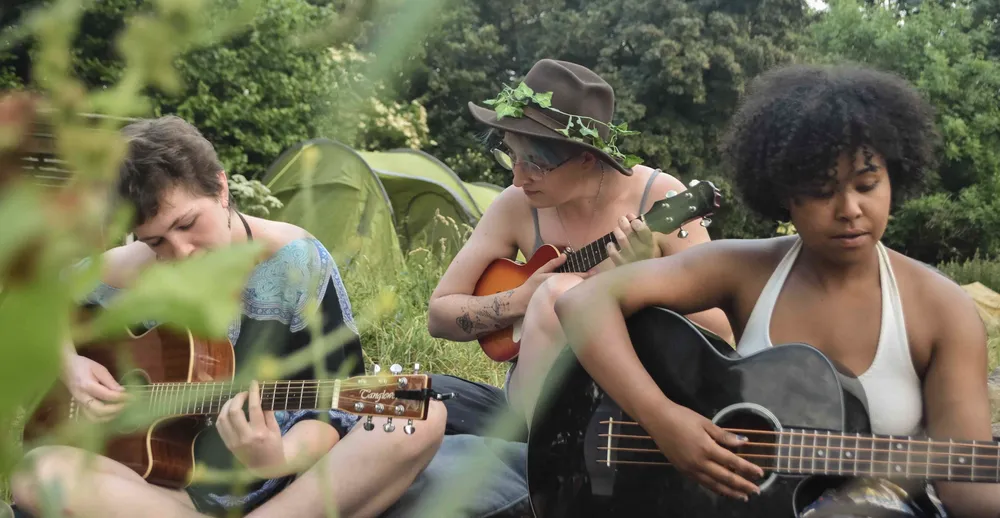
Participants share a newly co-written song at a CHORUS Summer Songwriting Retreat. Credit: Inshot Media. Download 'Hannah Louise Partridge CHORUS Photo'

This year marks our fifth year, which we celebrated by hosting our first alumni retreat. We brought together a dozen songwriters who had previously taken part in our programmes, giving them space to reconnect, collaborate, and reflect on their creative journeys.

One of the most exciting aspects was that participants helped shape the retreat themselves. Some facilitated workshops, others helped organise sessions, and several stepped into event-production roles for the first time. Watching them take ownership of the space and support each other showed just how strong the community has become.

Looking ahead, our focus is on sustainability so this work can continue to grow. We’ve started exploring sponsorship to create a small annual fund that could cover core organisational costs, allowing us to dedicate more time and energy to designing programmes that make the biggest difference through musical connection.

I’ve also had many conversations about creating programmes for older people returning to songwriting, as well as initiatives for men, particularly in response to the growing mental health challenges being seen in the South West.

My hope is that CHORUS can gradually expand to support a wider range of people, putting the insights from my Churchill Fellowship into action. Because ultimately, songwriting isn’t just about music. It’s about creating spaces where people feel heard, connected and empowered.

Disclaimer

The views and opinions expressed by any Fellow are those of the Fellow and not of the Churchill Fellowship or its partners, which have no responsibility or liability for any part of them.

Related

Blogs & conversations

A Changemaker Mam: Building Theatre for Survivors

JoJo Kirtley reflects on balancing her Churchill Fellowship with life as a mother of three while exploring how survivor-led theatre can challenge violence against women and girls. Drawing on learning from practitioners across Europe, North America, and Africa, she shares how community-led creative work can build safety, solidarity, and lasting change. Now developing her Theatre of the Survivor framework in the North East of England, JoJo is putting this learning into practice to support women and communities.

By JoJo Kirtley,

Blogs & conversations

Beyond the Beat: Building the Architecture for Creative Communities

Dominic Heslop’s Churchill Fellowship explored the “cultural architecture” that allows creativity to thrive and communities to heal, taking him to Jamaica, Berlin, and Athens – each offering lessons in resilience, expression, and collective care. Back in Sheffield, Dominic is embedding these insights into his grassroots organisation Slambarz, combining artistry with structure to support young people, build community, and show how creativity can strengthen wellbeing and identity.

By Dominic Heslop,

Blogs & conversations

Improving care for those living and dying at society’s margins

Palliative care doctor Shaun Qureshi explores how the field can rekindle its original, radical spirit by addressing the inequities faced by marginalised people who remain under-served in current practice. His Churchill Fellowship took him to the USA and Canada, where he learned from centres of care for excluded groups and saw how trauma-informed, social justice, and inclusive approaches can be embedded into everyday work. His report sets out practical recommendations for building a system where everyone can access the palliative and end-of-life care they need.

By Shaun Peter Qureshi,

Blogs & conversations

In conversation with Faith Yiminyi: Beyond the learning: a Churchill Fellowship’s lifelong influence

We spoke to Faith Yiminyi about her 2009 Churchill Fellowship, which took her to the United States to explore how dance companies could thrive and open opportunities for young people. At just 21, she set out to learn new styles, work with choreographers, and see how dance could build confidence and enrich communities. More than 15 years on, Faith reflects on how her Fellowship shaped her journey – from running her own dance school, to working in social care and cyber security, and now returning to dance as a board member of a community studio.

By Faith Yiminyi,

Newsletter Sign Up