The shared legacy supporting kinship carers - The Churchill Fellowship

The shared legacy supporting kinship carers

For 2024 Fellow Lucy Peake, it was her work in kinship care which led to her Fellowship and – by happy coincidence – the charity she heads was itself set up by a Churchill Fellow.

Lucy is CEO of Kinship, but it was in her previous role with the Fostering Network, that she first became aware of the lack of support for kinship carers, who are family members or friends looking after children, often in an informal arrangement.

Formal foster carers have access to a range of support, but for the thousands of kinship carers who aren’t in a formal fostering arrangement, that door is often closed, as Lucy explains.

“Often something happens in the family; it’s a case of stepping up to look after the children, and so people can suddenly find themselves as kinship carers. This may be an informal arrangement, and the type of arrangement matters, because it determines the level of support that is available. It is a system that is riven with inequality.”

In 2015 Lucy became CEO of Grandparents Plus, co-founded by the late Jean Stogdon, a 1999 Churchill Fellow, which became known as Kinship in 2021.

Drawing on its extensive network of kinship carers, the charity had developed a support programme with one-to-one and peer support. On the strength of evidence of impact, this evolved into a programme called Kinship Connected, which was then made available to local authorities in England and Wales to commission.

“You could see there was something really promising here, all being shaped by kinship carers and their needs, plus an expert steering group.”

"While I could read about it online, the Fellowship gave me the chance to see what was happening in practice... It gave me a chance to spend face-to-face time with people I never had before."

Lucy then learnt of a similar-sounding initiative in the USA – Kinship Navigator – and wanted to see for herself how it operated. Her 2024 Churchill Fellowship enabled her to do just that.

“I wanted to know if what they were doing in the USA was similar. While I could read about it online, the Fellowship gave me the chance to see what was happening in practice. I also wanted to understand how the approach had developed – the importance of co-design with kinship carers, the approach to evaluation and how that has underpinned federal government investment in its current expansion across the USA.”

Kinship care in the United States

Lucy’s first stop was an international kinship care conference in Kentucky, where she made phenomenal connections that she still draws on today. She was also surprised and delighted to find that kinship organisations in the States were following Kinship’s activities and were as interested in what she was doing, as she was in them. It felt like something they could really share.

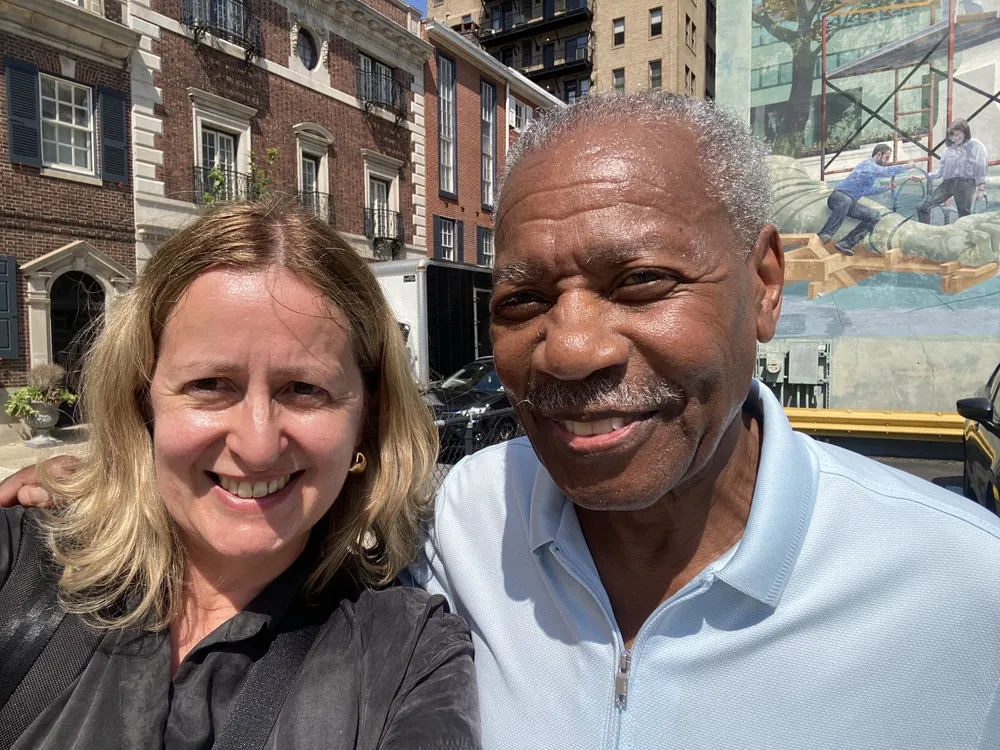
Lucy visited navigator programmes in New York, New Jersey, Washington State, and Florida. In Philadelphia, she met Dr Joseph Crumbley – known as the god of kinship care in the USA – who had met Jean Stogdon on her Fellowship travels; indeed, he was an inspiration for the founding of Grandparents Plus.

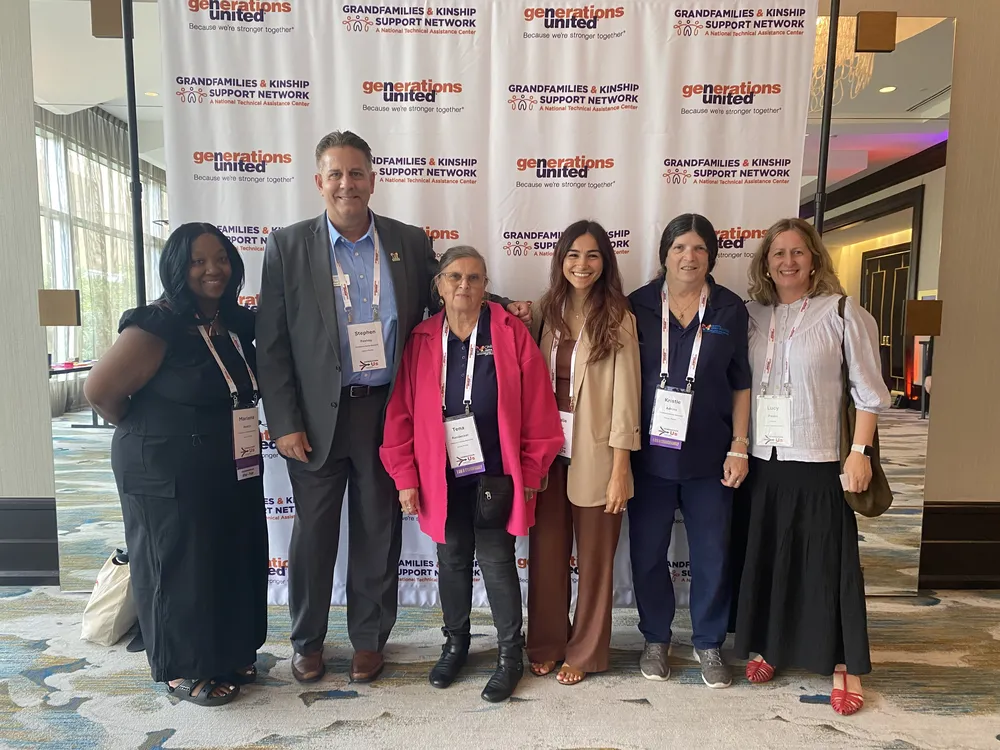
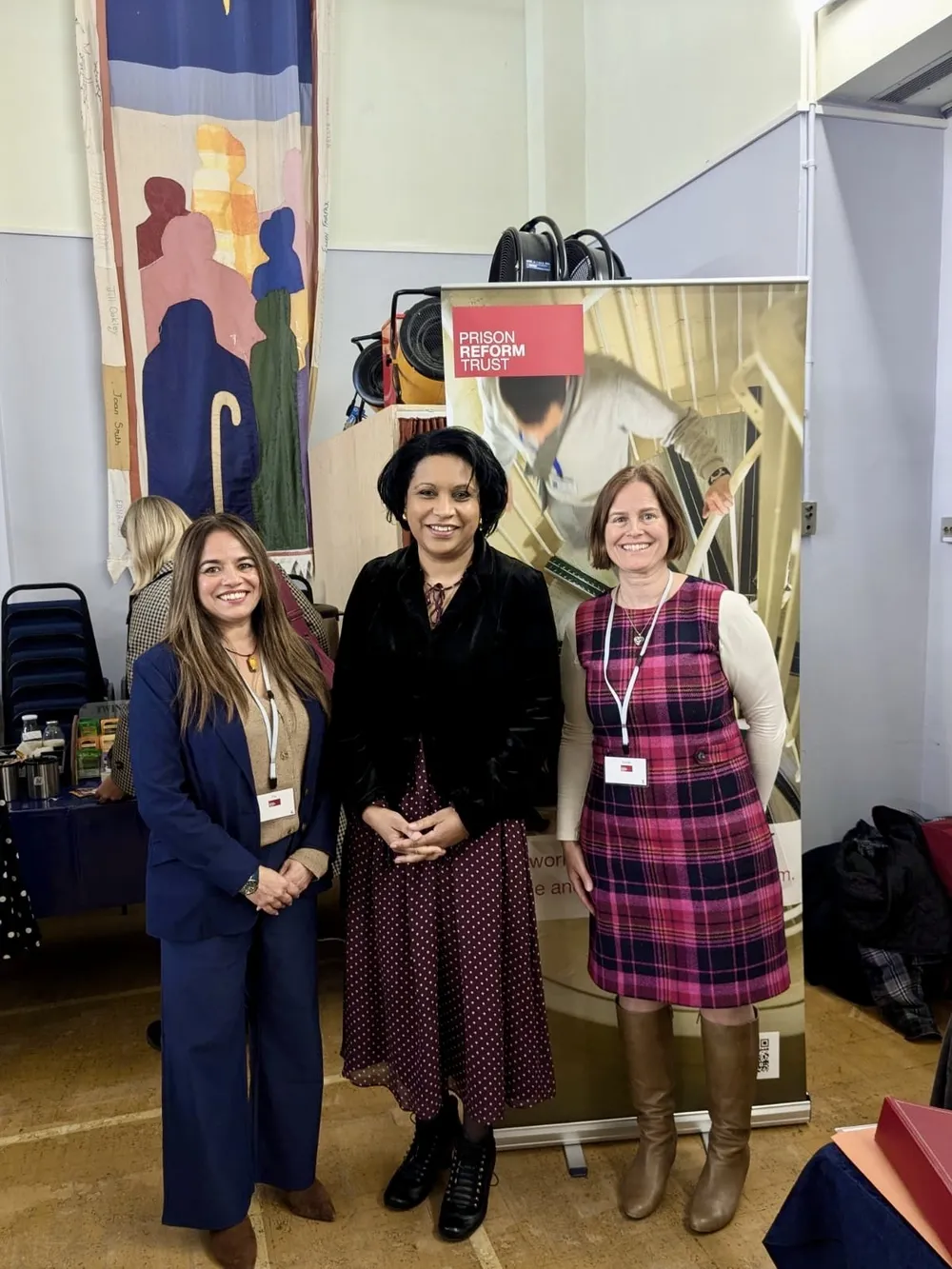
Lucy, far right, with kinship navigators from Florida at the Generations United conference in Kentucky Download 'Lucy Peake_IMG_8374'

Investigating USA navigator programmes, Lucy found many similarities with Kinship Connected: both offer a six-month intervention, with support from a navigator and peer support. Importantly, navigators work within local ecosystems to raise awareness about kinship care, and to better connect services to kinship families who need them.

“I was with kinship navigators in Washington State, sitting with kinship carers and hearing the same stories that I would hear in the UK, and I found how very similar the navigator was to our own Kinship Connected.”

Both USA and UK kinship navigators are often employed by independent charities, intentionally outside the statutory child welfare services in order to build independence and trust. However, funding models differ: while the UK’s Kinship Connected often relies on year-by-year renewal from local authority commissions, states like Washington treat navigators as essential infrastructure, providing committed funding for over 20 years.

This is the level of support that Kinship now hopes to attain for the UK. A pilot randomised control trial is due to begin in September, funded by ‘Foundations What Works Centre for Children and Families’, to provide a higher level of evidence of the efficacy of the Kinship Connected programme. If successful, it is hoped that a full trial will be run. Ultimately, the aim is to influence government policy and encourage long-term investment in well-supported kinship care.

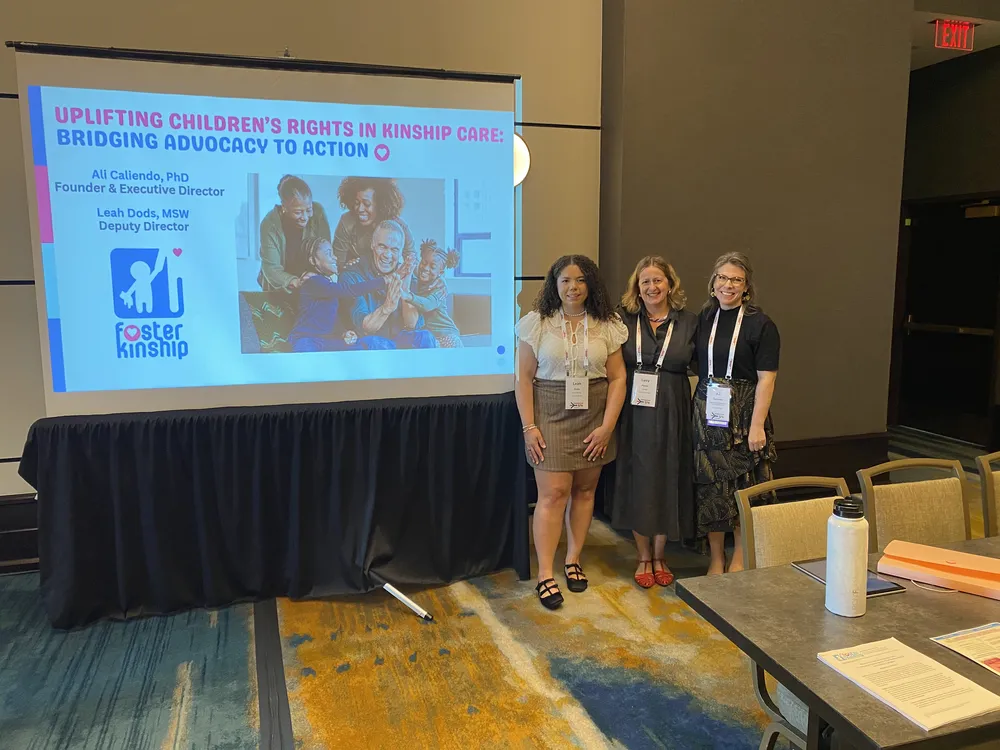
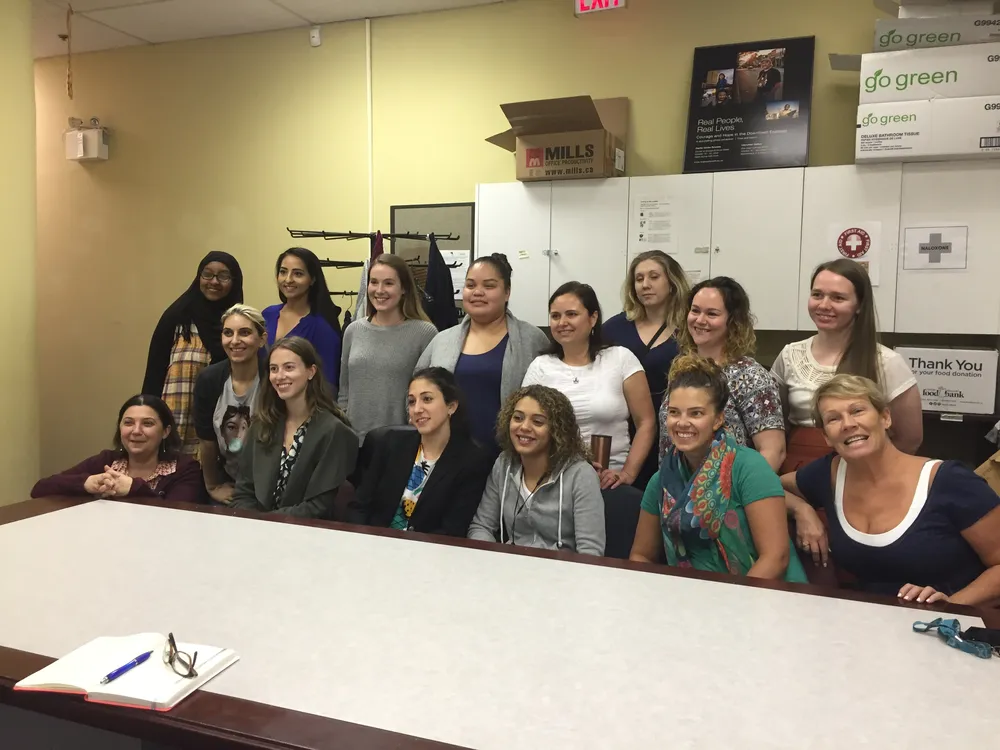
Lucy with Dr Ali Caliendo and Leah Dodds from Foster Kinship at the Generations United conference Download 'Lucy Peake_IMG_8383'

Lasting impact of a Churchill Fellowship

What the Fellowship gave Lucy was time and opportunity.

“It gave me a chance to spend face-to-face time with people that I had never had before, and I have gone on to introduce my team to some of those experts. For example, Professor Angelique Day, a leading academic in America, ran a workshop for my team to help us set up the Kinship Connected trial.”

The Fellowship experience has also enriched kinship carers themselves, with friendships and community developing between kinship carers the UK and the USA. They’ve already met online, exchanged cards and visits are planned.

In another new initiative funded by the National Lottery, Kinship is partnering with Inspiring Scotland to deliver Kinship Connected alongside its established Intandem mentoring programme for children in kinship care.

As Lucy says, “We want to build a kinship care system that is fit for the future, and navigator is part of that solution.”

Disclaimer

The views and opinions expressed by any Fellow are those of the Fellow and not of the Churchill Fellowship or its partners, which have no responsibility or liability for any part of them.

Related

Blogs & conversations

Building together: rethinking teacher wellbeing and career sustainability

During her Churchill Fellowship in Ghana, Dr Chiedza Ikpeh explored how teacher wellbeing grows through community, adaptability, and shared responsibility. Speaking with teachers, she how collective approaches help educators thrive, even in challenging conditions. Witnessing this resilience reshaped how she understands teaching and what allows careers to be sustained over time, and Chiedza is now bringing this learning into her research and development work with teachers across the UK.

By Chiedza Ikpeh,

Blogs & conversations

Following the questions: a Fellow's journey

From an off-the-cuff question as a teacher to lasting change across policy and practice, Sarah Beresford traces how curiosity shaped her Churchill Fellowship and everything that followed. She reflects on learning from other countries, turning insight into action, and how asking the right questions has helped centre children’s voices in the criminal justice system.

By Sarah Beresford,

Blogs & conversations

In Conversation with Sophia Alexandra Hall: Empowering care-experienced voices in the media

We spoke to Churchill Fellow Sophia Alexandra Hall about how her Fellowship helped shape her trauma-informed interviewing toolkit, now used across major UK newsrooms. Drawing on her lived experience and 50 interviews in the USA, she reflects on the need for safer, more empowering media practices for care-experienced and other under-represented people. She also shares how this work has grown through training, conference speaking, and an expanding public platform at Big Issue.

By Sophia Alexandra Hall,

Blogs & conversations

Health, Homelessness, and Hope: Children in Temporary Accommodation

Monica Lakhanpaul’s Fellowship took her to Australia to explore how different systems respond to the health and wellbeing needs of children living in temporary accommodation. Back in the UK, her work has already helped launch the In Their Own Words report in the Scottish Parliament and continues through research, media, and international collaborations. She now hopes to build on this momentum to ensure that children’s voices are heard – and acted upon – in shaping a fairer future.

By Monica Lakhanpaul,

Newsletter Sign Up