Following the questions: a Fellow's journey - The Churchill Fellowship

Following the questions: a Fellow's journey

"Why don't I go and visit their mum in prison?" It was an off-the-cuff question to the carers of three children whose mother had been sentenced to life in prison, and an attempt to demonstrate my commitment, as their teacher, to supporting them. I was not sure I would be allowed to visit a prison – it just seemed the obvious thing to do.

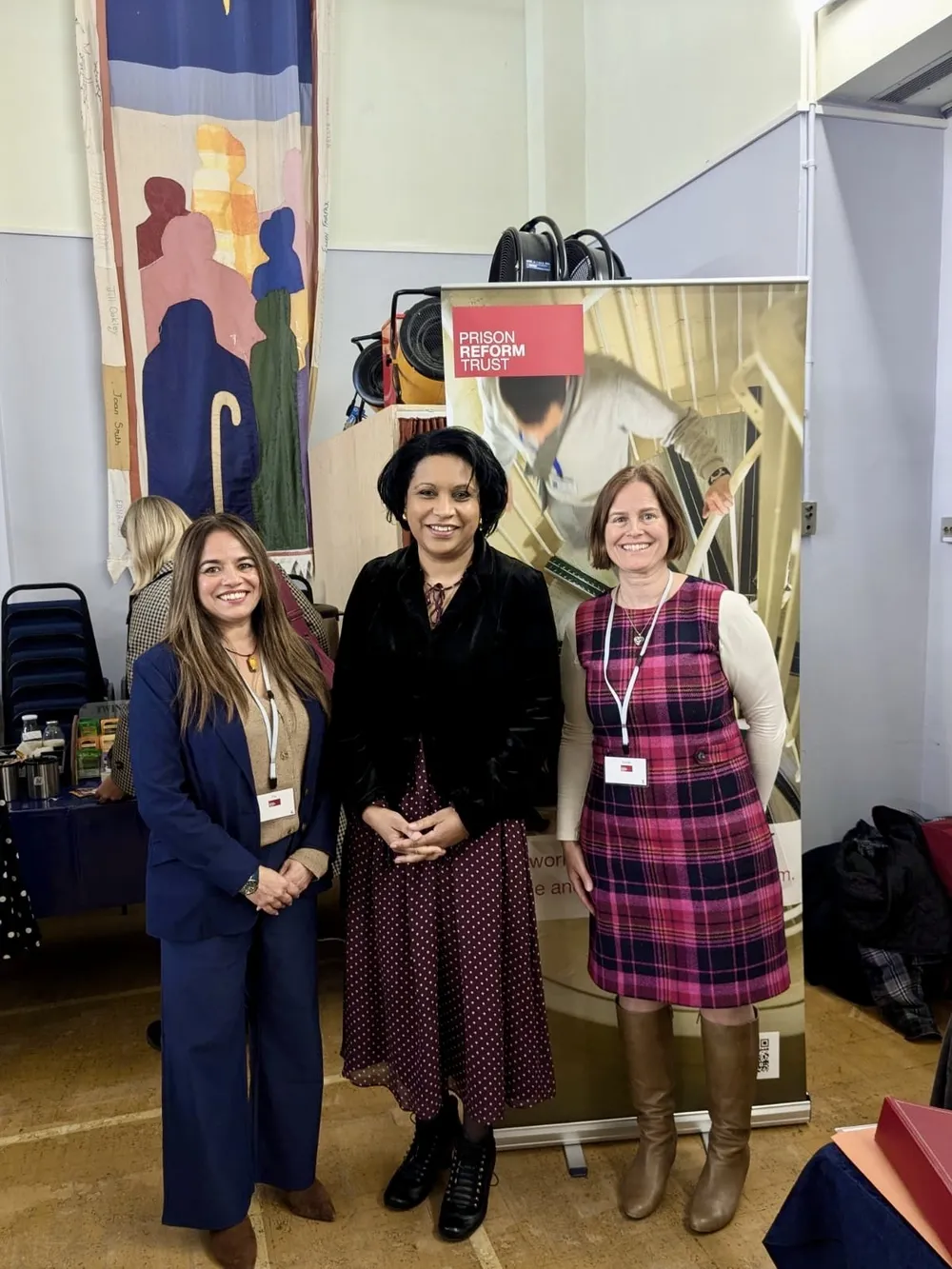
Left to right: Pia Sinha (CEO of Prison Reform Trust), Janet Daby MP, and Sarah Beresford OBE at Prison Reform Trust's 'Right here, right now!' event in May 2025. Download 'Sarah Beresford Photo with Minister'

I had received no training about the impact of parental imprisonment on children, and the family, rather than being offered support, had experienced the stigma and shame that I now know are all too common.

Several years later, having regularly visited the children's mother in prison to involve her in her children’s education, an incidental question from a prison officer changed my life: “Why don’t all the mums in here get this kind of support?” I knew then that I had to leave teaching, a job I loved, to explore this gap.

The week I handed in my resignation, with no firm plan in mind, my mother happened to meet her friend and Churchill Fellow Liz Sutherland. Liz’s impromptu suggestion became another pivotal moment: “It would be good if Sarah could learn how other countries support children with a parent in prison; has she heard of the Churchill Fellowship?” I had not and promptly set about applying!

In 2012, I was awarded a Fellowship to consider the role of schools in supporting families affected by imprisonment. I travelled to Australia and America, visiting projects in prisons, schools, and the community that informed my vision for change. On my return, Prof Nancy Locks OBE, CEO of Families Outside, a charity that supports families in Scotland impacted by imprisonment, asked yet another question that opened a new door: “Could you present your Fellowship findings in the Scottish Parliament?” A job with Families Outside followed, based on implementing my Fellowship recommendations.

"Stepping into the unknown is never easy... be curious, follow the questions, and trust that the right doors will open."

In December 2015, I relocated to Liverpool and again stepped into the unknown. I became an independent consultant specialising in children affected by imprisonment. Once again, a chance conversation marked a turning point when Dr Jenny Earle, then director of the Prison Reform Trust’s Transforming Lives programme, said: “I don’t suppose you could help write some briefings?”

One of those reports was What about me?, considering the impact of maternal imprisonment on children. I interviewed a woman who had just come out of prison, and her question (again, offhand without realising its significance) was a catalyst moment: “What about a child impact statement in the child’s own words?” This question coincided with the Churchill Fellowship’s pilot Activate Fund and has shaped my work ever since.

My 2021 Activate Award culminated in the publication of the “This is me” toolkit to improve support for children with a primary carer in contact with the justice system. This paved the way for the Child Impact Assessment resources to ensure all children are listened to, supported, and included in decisions about that support from a family member’s arrest through to their release from custody. This ongoing project encourages children to be advocates for change and calls for a children’s rights approach to underpin policy and practice.

I was hugely honoured to receive an OBE in the 2026 New Year Honours List for services to Children with Parents in the Criminal Justice System, a recognition that really belongs to the children and young people with whom I work. Stepping into the unknown is never easy, and I am profoundly grateful to the Churchill Fellowship, and everyone who has accompanied me along the way, for teaching me what continues to define my journey: be curious, follow the questions (as incidental as they may seem), and trust that the right doors will open.

Disclaimer

The views and opinions expressed by any Fellow are those of the Fellow and not of the Churchill Fellowship or its partners, which have no responsibility or liability for any part of them.

Related

Blogs & conversations

In Conversation with Sophia Alexandra Hall: Empowering care-experienced voices in the media

We spoke to Churchill Fellow Sophia Alexandra Hall about how her Fellowship helped shape her trauma-informed interviewing toolkit, now used across major UK newsrooms. Drawing on her lived experience and 50 interviews in the USA, she reflects on the need for safer, more empowering media practices for care-experienced and other under-represented people. She also shares how this work has grown through training, conference speaking, and an expanding public platform at Big Issue.

By Sophia Alexandra Hall,

Blogs & conversations

Beyond the Beat: Building the Architecture for Creative Communities

Dominic Heslop’s Churchill Fellowship explored the “cultural architecture” that allows creativity to thrive and communities to heal, taking him to Jamaica, Berlin, and Athens – each offering lessons in resilience, expression, and collective care. Back in Sheffield, Dominic is embedding these insights into his grassroots organisation Slambarz, combining artistry with structure to support young people, build community, and show how creativity can strengthen wellbeing and identity.

By Dominic Heslop,

Blogs & conversations

“Kindness and Goodwill”: Developing Postvention in Prison

With self-inflicted deaths in prisons remaining consistently high, Piers Barber set out to explore how prisons can respond with stronger postvention – systematic aftercare following a suicide. His Fellowship took him to New Zealand, Australia, and Canada, where he saw examples such as the embedded role of chaplains in New Zealand prisons, new trials in Australia, and trauma training models for staff in Canada. He is now sharing his reflections with UK practitioners and policymakers, calling for leadership, mapping of all contact points, and varied support to strengthen suicide prevention in custody.

By Piers Barber,

Blogs & conversations

Health, Homelessness, and Hope: Children in Temporary Accommodation

Monica Lakhanpaul’s Fellowship took her to Australia to explore how different systems respond to the health and wellbeing needs of children living in temporary accommodation. Back in the UK, her work has already helped launch the In Their Own Words report in the Scottish Parliament and continues through research, media, and international collaborations. She now hopes to build on this momentum to ensure that children’s voices are heard – and acted upon – in shaping a fairer future.

By Monica Lakhanpaul,

Newsletter Sign Up