What it Takes to Build Trauma-Responsive Systems - The Churchill Fellowship

What it Takes to Build Trauma-Responsive Systems

I completed my 2020 Fellowship in August 2024. During this time, I had the privilege of visiting Norway and the USA in search of education, community, and family-based interventions to support trauma, attachment, and ACEs (Adverse Childhood Experiences).

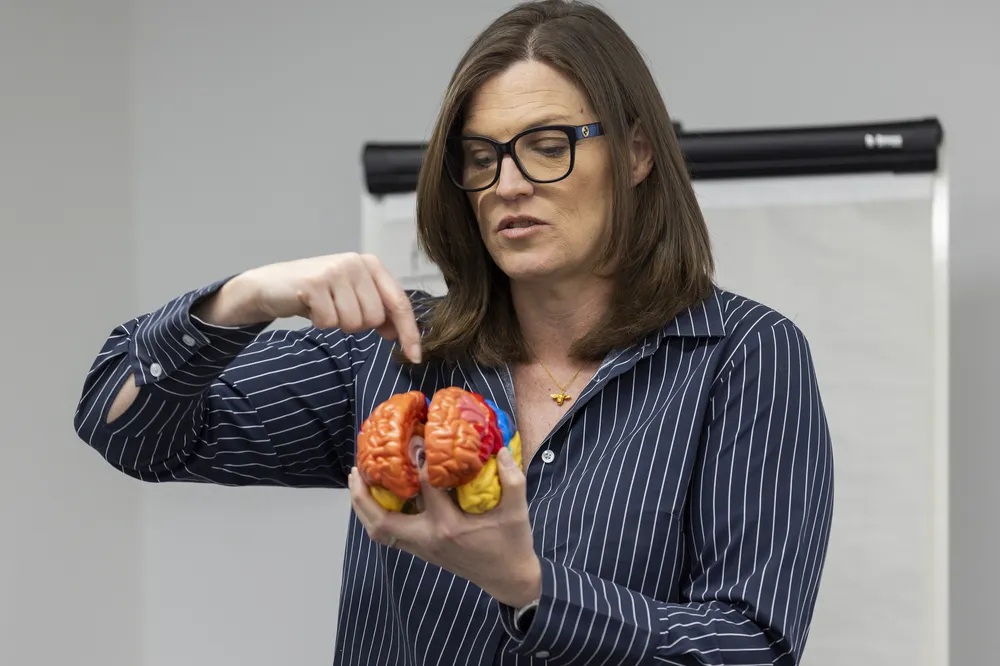
Before starting on my journey, I’d spent 23 years as a teacher across the Northwest of England, finishing my career as the Headteacher of a Special School in Liverpool. I then joined the Merseyside Violence Reduction Partnership (MVRP) as the Education Lead, and my fellowship spurred the desire to start a PhD in Public Health, embedding trauma-informed practice at Liverpool John Moores University.

As the Education Lead, I wrote and began delivering an eight-hour in depth Trauma-Informed Practice Training (TIPT) course for education staff, which rapidly became a public service course. With their support, we’ve rolled this out to over 12,000 public service staff in Merseyside, including over 4,000 police officers and 59 whole schools.

I truly believe that my Fellowship inspired me to look beyond one element of lifespan (education) to all the areas of multi-agency work that overlap, as no one organisation works in isolation, and children grow through the systems, carrying the burden of trauma, attachment, and ACEs. Research from 24 countries estimates that 70% of adults have experienced at least one traumatic event, including exposure to violence, injury, or other adversities, and around one sixth of adults have experienced four or more ACEs.

"I am so grateful not only for the opportunity to have internationally travelled through my Fellowship, but to also have made connections and collaborations with changemakers here."

Since finishing my Fellowship, my global connections have continued to flourish, with monthly discussions about the barriers faced by others trying to implement trauma-informed practice across the world. My research into the impact of the training six months on was published in the Journal of Public Health last year.

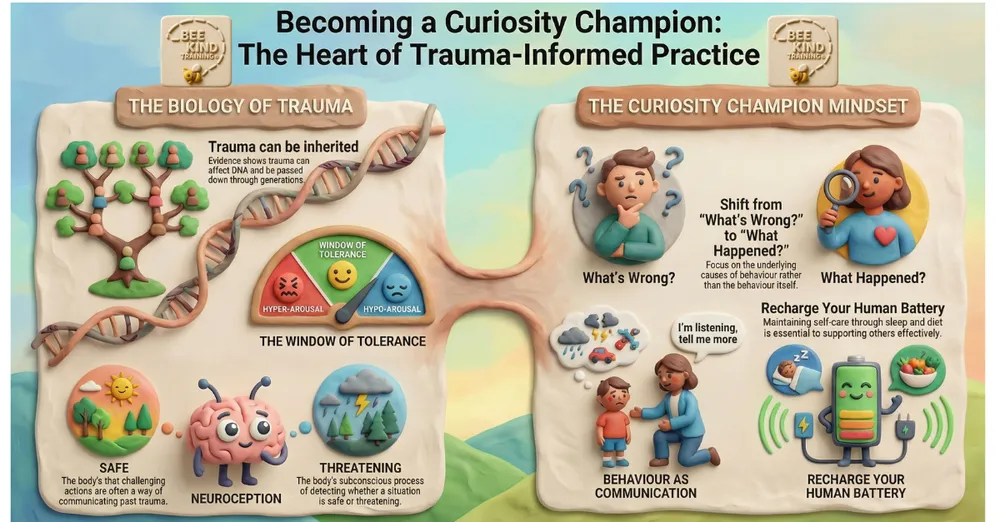
What this research highlighted were the limitations in achieving system-wide change. It’s one thing to teach people about themselves – that’s easy – it’s another to change the systems people return to after the training, with antiquated policy and practice, and to truly develop a deep understanding of behaviour. Behaviour is contagious: if we smile, chances are someone smiles back; if we frown, learning is reduced; if we feel scared, we react. So it’s one thing to teach the theory – putting that into practice when the chips are down and the cortisol is flowing is another entirely.

I sit in a privileged position. Not only have I trained vast swathes of the public sector in TIPT, but I’ve also had the advantage of reading their feedback in the research. When you can see the gaps, where the practice is not bridging theory, it helps to call on others.

The Trauma Informed Curiosity Champions Conferences (TICCC) started in Liverpool but are now moving around all the boroughs of Merseyside. With the help of fellow Churchill Fellows we’ve run six so far. Our Curiosity Champions are driving changes in practice within their organisations. Some have gone on to become our 69 trauma-informed parent trainers, delivering free six-week wrap-around courses in compassionate parenting. Others have applied, or will be applying, for Fellowships. With the structural workforce support of the toolkit, they have the background, assessment tools, and language to embed practice – transforming trauma-informed approaches to trauma-responsive systems in Merseyside.

I am so grateful not only for the opportunity to have internationally travelled through my Fellowship, but to also have made connections and collaborations with changemakers here. Their continued support, and what is coming next, continues to drive this work forward.

Disclaimer

The views and opinions expressed by any Fellow are those of the Fellow and not of the Churchill Fellowship or its partners, which have no responsibility or liability for any part of them.

Related

Blogs & conversations

Building together: rethinking teacher wellbeing and career sustainability

During her Churchill Fellowship in Ghana, Dr Chiedza Ikpeh explored how teacher wellbeing grows through community, adaptability, and shared responsibility. Speaking with teachers, she how collective approaches help educators thrive, even in challenging conditions. Witnessing this resilience reshaped how she understands teaching and what allows careers to be sustained over time, and Chiedza is now bringing this learning into her research and development work with teachers across the UK.

By Chiedza Ikpeh,

Blogs & conversations

Supporting adolescent mental health in schools

Through his Churchill Fellowship, Charlie Samuda explored how schools in the USA, Canada, and South Korea are responding to the adolescent mental health crisis. Visiting over 30 organisations and schools, he examined how independent guidance, curriculum design, counselling, and safety systems can help schools support students more effectively. He reflects on what England could learn from these approaches as pressures on schools continue to grow.

By Charlie Samuda,

Blogs & conversations

Organising with Parents and Carers: Lessons from the US East Coast

Visiting cities across the East Coast of the USA, I explored how parent-led organising is creating change in education – from winning funding for school buildings to building trust between families and institutions. My Churchill Fellowship is now helping shape how we grow our Parent Power programme at The Brilliant Club, embedding lessons on community, leadership and long-term impact.

By Jimmy Pickering,

Blogs & conversations

"If Not Us, Then Who?" Transforming Social Care

A BBC debate on the Assisted Dying Bill pushed me out of my depth – but my Churchill Fellowship had prepared me to feel the fear and do it because. What began as a modest research plan became a five-week tour across the USA, connecting with trauma institutes, service providers and experts. The relationships I built continue to shape my work today, including through Unique Connections – our growing effort to build a social care system grounded in love, belonging, and equity for people with intellectual disabilities.

By Beverley Samways,

Newsletter Sign Up